Now available for purchase! Self-Intervention for Conscious Leadership, a guided, personalized experience to strengthen how you lead under pressure. See What’s Included
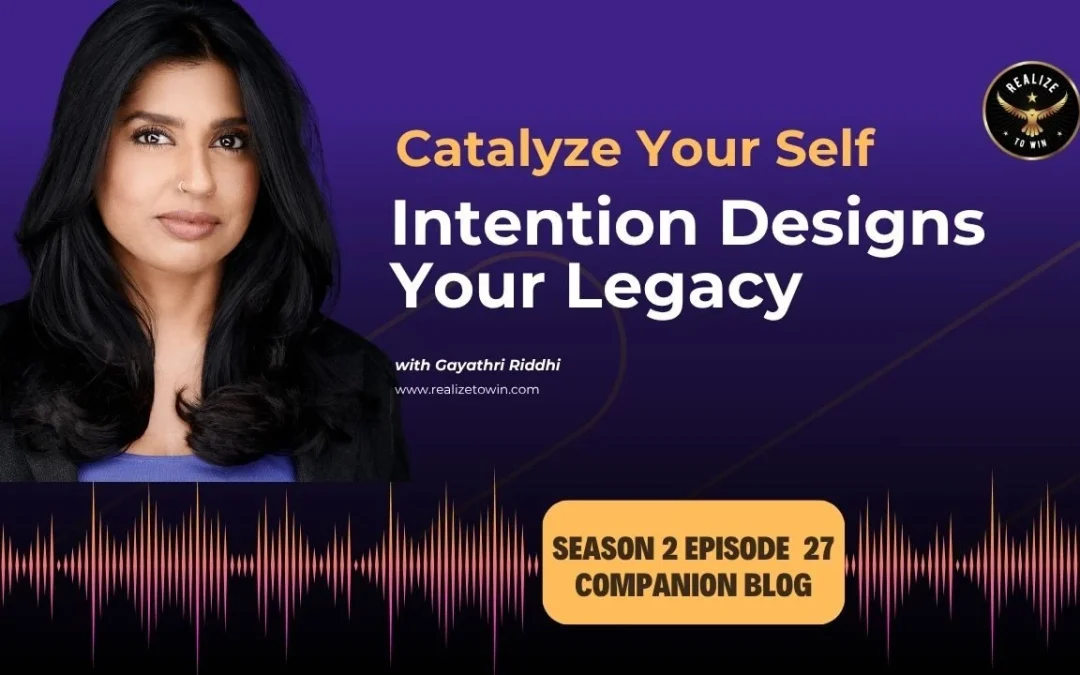
Intention Designs Your Legacy

Intention Designs Your Legacy

Intention Designs Your Legacy

Legacy is not just about what people remember when we’re gone. It’s about what continues because of us, the patterns, practices, and values that others carry forward after we’ve stepped away.

We’ve already seen in earlier reflections how presence shapes culture. In ‘You & the Bigger Picture’, we explored how every choice ripples outward. In ‘Everyday Conscious Leading’, we grounded leadership in the micro-moments that build trust. And now, with intention, we take those ripples and begin designing them into something enduring.

Impact vs. Legacy

Impact happens whether we plan it or not. Our presence creates ripples, in our homes, our teams, our communities. But impact alone can be accidental, even contradictory. Legacy is what happens when we move from accident to design.

The question becomes:

  • What do I want to continue unchanged if I’m no longer in the room?
  • What patterns do I want repeated, not just remembered?
  • Legacy isn’t built in hindsight. It’s created in real time, through the way we live, lead, and choose today.

Integration as Architecture

The SIRE Model™ gives us a pathway for legacy design:

  • Self-Awareness names what matters enough to endure.
  • Self-Inspiration keeps values alive with energy and meaning.
  • Self-Regulation shows others how to stay steady under pressure.
  • Self-Expression makes the invisible visible, practices others can repeat.
  • Self-Reflection keeps our legacy evolving, not frozen in one moment.

Integration is what makes legacy durable. Without it, legacy fragments into isolated memories. With it, legacy becomes consistent and repeatable.

The Fade and Fork Tests

Two lenses help us see our legacy more clearly:

The Fade Test asks, if I step away, what continues? What quietly fades? This reveals where we’ve built dependency instead of design.

The Fork Test is what shows up at the crossroads for our values, speed vs. quality, harmony vs. candor, what do I consistently choose? Because those repeated choices, especially under pressure, are what people remember and repeat.

And when we miss the mark, ownership becomes part of the legacy. Not perfection, but the willingness to say: “This was my choice, here’s the impact, and here’s how I’ll realign.” That steady honesty is often remembered more than the stumble itself.

Living Legacy in Practice

Legacy design doesn’t require grand gestures. It lives in patterns we repeat until others can carry them too:

  • Pausing before reacting.
  • Welcoming difference without fear.
  • Interrupting bias with steadiness.
  • Choosing clarity over urgency.

Three to five intentional, repeatable patterns are enough to create rhythms that outlast us.

From Barriers to Freedom to Design

In ‘Breakthrough Your Barriers’, we saw how old protection patterns can hold us back. Once we move through them, what follows is freedom. Legacy design asks: What do we want to build with that freedom?

Every barrier we release becomes space to embed something lasting, not just for ourselves, but for the people and cultures we touch.

Legacy is not a speech at the end of our lives. It’s the portfolio of patterns we live now. It’s the blueprint of intention, integration, and practice that outlives us.

So let us pause and ask:

  • What continues without me?
  • What choices at the fork reveal the legacy I’m really leaving?
  • How am I designing patterns that others can repeat, not just admire?

To explore this reflection more deeply, listen to the full episode of Catalyze Your Self:
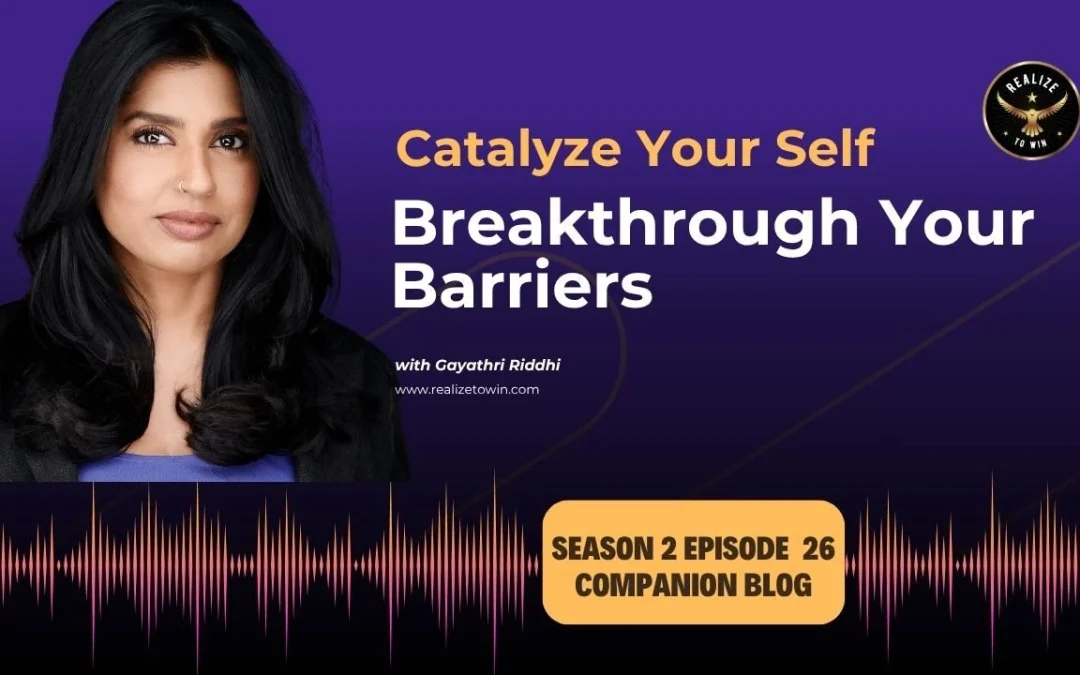
Breakthrough Your Barriers: Seeing Beyond the Patterns That Hold You Back

Breakthrough Your Barriers: Seeing Beyond the Patterns That Hold You Back

Breakthrough Your Barriers: Seeing Beyond the Patterns That Hold You Back

When we think of barriers, most of us picture external blocks, the lack of resources, the people who don’t support us, the systems around us that make things harder. And those are real.

But if we look closer, the most powerful barriers often live inside us. They show up in the ways our nervous system tries to protect us:

  • The hesitation to speak even when we have something important to say.
  • The over-preparing that looks like diligence, but underneath is fear of not being enough.
  • The over-apologizing that keeps us small, even when we’ve done nothing wrong.
  • The pushing through exhaustion, believing our worth is measured in productivity.

To the outside world, these can look like strengths, thoughtfulness, humility, resilience. But beneath them, there’s often a pattern. A protection strategy that once kept us safe, but now quietly limits our presence, our freedom, our trust in ourselves.


Barriers Are Not Who You Are

A barrier is not a flaw in you. A barrier is a pattern. And patterns can change.

They live in the language of our nervous system, echoes of past experiences, identities we inherited, the rules we absorbed to survive. Somewhere along the way, we learned: stay small to stay safe, over-deliver to be valued, avoid conflict to keep belonging.

These scripts become so familiar we confuse them with truth. We begin to believe, “This is just who I am.” But the reality is, they’re just signals. And with presence, we can begin to see them differently.


Discomfort vs. Danger

One of the hardest truths to face is this: not every signal our nervous system sends is a true threat. Sometimes what feels like danger is just discomfort, the stretch of stepping outside an old identity.

  • Speaking up in a meeting may feel unsafe, when really it’s just unfamiliar.
  • Saying no may feel risky, when really it’s simply breaking a pattern of automatic yes.
  • Resting may feel like failure, when really it’s the nervous system learning that value is not tied to exhaustion.

When we begin to separate danger from discomfort, we create the space to choose differently. That’s where breakthrough begins.


The Role of Integration

Breakthrough doesn’t come from smashing walls with more effort. It comes from integration, allowing all parts of our mind to work together instead of against each other.

The SIRE Model™ gives us that path:

  • Self-Awareness to notice when hesitation or over-functioning is really fear disguised as habit.
  • Self-Inspiration to reconnect with why our integrity matters more than our comfort.
  • Self-Regulation to steady the body so we can discern whether this is a true threat or an echo of the past.
  • Self-Expression to voice what’s real, even when it feels risky.
  • Self-Reflection to gently track our growth and keep choosing presence over pattern.

With integration, breakthrough stops being dramatic. It becomes a quiet, steady shift: choosing clarity over autopilot, authenticity over approval, rest over performance.


Breakthrough Is Not Force

True breakthrough isn’t about pushing harder, forcing our way through, or proving we can outwork the barrier. It’s about clarity. It’s about noticing the signal, pausing to ask, “Is this really danger, or just discomfort?”, and then choosing differently.

The barrier may still whisper. The instinct to hesitate, overextend, or apologize may still rise. But with presence, those patterns no longer define us. We can meet them, discern them, and move through them with steadiness.

That’s what breakthrough really is: integration made visible.

To explore this reflection more deeply, I invite you to listen to the full episode of Catalyze Your Self

Catalyst for Change: Why It Begins with You

Catalyst for Change: Why It Begins with You

Catalyst for Change: Why It Begins with You

We hear the word catalyst everywhere today. On résumés. In mission statements. Across social feeds. Be a catalyst for transformation. A catalyst for innovation. A catalyst for change. And like so many words repeated too often, it risks losing its depth. It starts sounding like branding instead of truth.

A catalyst isn’t a trend. It is an important role that carries weight. In chemistry, a catalyst lowers the barrier so a reaction can happen more easily, but only if the conditions are ready. It doesn’t force the reaction. It doesn’t become the reaction. It simply allows what’s possible to move forward with less resistance.

And that’s where the meaning lands for us. Because in life, too, we don’t create change out of nothing. We can’t make people or systems transform by sheer will. What we can do is accelerate what’s already possible when readiness is present.

Why Catalyze Your Self

When I named this podcast Catalyze Your Self, it wasn’t to sound powerful, it was because the most important change is the one we begin within.

We often look for catalysts outside us, leaders, mentors, moments of disruption. And those matter. But the change that lasts? The kind that sustains? It comes when we learn how to lower our own barriers to growth.

Catalyzing yourself is not about reinventing everything at once. It’s about recognizing the small shifts:

  • That pause before saying yes, to check if it comes from clarity or habit.
  • That breath before reacting, to see if regulation is possible.
  • That choice to voice something real, instead of hiding behind the polished mask.

This is the work of self-leadership. Of Self-Awareness noticing the gap. Self-Inspiration holding the why. Self-Regulation steadying us when discomfort rises. Self-Expression making change visible. All of it sustained by Self-Reflection so we keep aligning as we go.

The Role of Readiness

Here’s the part we forget: no catalyst can create movement if readiness isn’t there.

Readiness isn’t just desire. It isn’t just motivation. It’s when there’s enough awareness, enough steadiness, and enough willingness for change to hold. Without readiness, what we spark burns out quickly. With readiness, the spark becomes momentum that others carry with us, and even without us.

That’s the difference between a surface-level breakthrough and true transformation.

Being a Catalyst Without Losing Yourself

One of the easiest traps is over-owning the change. When we see potential, we want to light it up, carry it, make sure it happens. But here’s the truth: if the change depends entirely on us, it’s not real change. It’s dependence.

A true catalyst sparks, models, and opens space. But they allow others to step in. Because sustainable change belongs to the system, not the spark alone.

My Invitation to you this Week

Take a moment and notice:

  • Where are you already serving as a catalyst?
  • What barriers are you helping to lower, for yourself, or for others?

And what’s the readiness of the system around you? Are you pushing against resistance, or preparing the ground so something lasting can take root?

To explore this in depth, listen to the full episode.

The Leader’s Mind: Seeing Beyond Power to True Leadership

The Leader’s Mind: Seeing Beyond Power to True Leadership

The Leader’s Mind: Seeing Beyond Power to True Leadership

When we think about leadership, it’s easy to imagine strategy sessions, decision-making, or the charisma of someone at the front of the room. But leadership is more than intellect or influence. A leader’s mind is the integration of how they think, how they feel, and how they stay aware, especially under pressure.

And this is where many of us stumble. We don’t follow leaders because we’ve studied their whole mind. We follow them because they’ve inspired us, validated us, or reflected back to us, something we value. That spark of connection is powerful, but it can also blind us to the full picture.

The Seduction of Power

Power and leadership are not the same. Power can come from position, charisma, or expertise. It can be used for good, but without integration, it can manipulate. It can play to our insecurities, our urgency, or our desire to belong. Leadership, on the other hand, is grounded in integrity. It requires the integration of cognition, emotion, and consciousness, so influence is carried with clarity, humanity, and presence.

Without integration, power can keep our loyalty through what feels good in the moment, even if the long-term impact is misaligned. That’s why it’s so important to learn to see beyond charisma or inspiration, to discern whether we’re following power or true leadership.

The Halo Effect and the Justification Reflex

When a leader resonates with us, our brain rewards us with dopamine, the same neurochemical that reinforces achievement or connection. It feels good. And because it feels good, we want more of it. This is where the halo effect takes root: we let one positive quality overshadow the rest. We assume their inspiration means their leadership is equally ethical, trustworthy, and whole, even when evidence suggests otherwise.

And when something doesn’t align? We often move into what I call the justification reflex. We protect the leader in our minds by rationalizing: “They didn’t mean it that way.” “Everyone makes mistakes.” “Look at all the good they’ve done.” This is natural. But when grace turns into habitual justification, accountability disappears, and growth, both theirs and ours, stalls.

The Responsibility We Share

Leadership is not a one-way street. Healthy leadership is mutual growth. Leaders create clarity, conditions, and safety for us to evolve. But we also carry a responsibility, to reflect what we see, to name both strengths and blind spots, and to stay rooted in truth, not just loyalty.

This requires discernment. We must pause to observe patterns over time, not just react to isolated moments. We must speak from reflection, not accusation. And we must prioritize truth over comfort, not to shame leaders, but to invite them back into alignment with their stated values.

When we do this, we help create cultures where accountability flows in both directions. Where presence matters more than performance. Where leadership becomes less about a single person, and more about a shared practice of awareness, regulation, and authentic expression.

Seeing the Whole Leader

The SIRE Model™ gives us a lens for this. When we look at a leader through Self-Awareness, Self-Inspiration, Self-Regulation, and Self-Expression, we begin to see their integration, or their fragmentation. Do they notice their patterns? Are they driven by purpose or urgency? Do they regulate under pressure? Do they express with clarity and care?

Seeing the whole leader doesn’t mean dismissing them when they fall short. It means engaging with clarity, holding both respect and truth. It keeps us from blind loyalty on one side, or cynicism on the other. It allows us to participate in leadership culture as co-creators, not just consumers.

A Shared Culture of Growth

At its best, leadership culture shifts not because one person leads differently, but because everyone strengthens their self-leadership. When awareness, inspiration, regulation, and expression grow across the system, leadership becomes integrated, not just embodied in one person, but lived by all.

And this matters because leadership isn’t just out there, in someone else’s role or title. It lives in us. The leader’s mind isn’t only something we evaluate in others, it’s something we practice within ourselves. The more we commit to our own integration, the more naturally we help others commit to theirs.

To hear this full reflection and explore how you can strengthen both your own self-leadership and the cultures you’re part of, listen to the complete episode of Catalyze Your Self: The Leader’s Mind.

Create Your Reality: Choosing Alignment Over Habit

Create Your Reality: Choosing Alignment Over Habit

Create Your Reality: Choosing Alignment Over Habit

Every moment of our lives, we are creating something, a pattern, a boundary, a way of showing up.

Sometimes that creation is intentional. Other times, it’s inherited, automatic, or shaped by expectations we’ve never questioned.

In this week’s Catalyze Your Self, we step into the quiet truth that our reality is not just what happens to us, it’s what we continue to build through the perceptions we hold, the choices we repeat, and the permission we give to our surroundings.

The question is: Are you living from alignment… or from habit?

Reality Is Filtered Before It’s Lived

As we explored in Episode 16, Perceive with Clarity, our mind doesn’t simply take in the world as it is, it filters it. Through past experiences, fears, and stories, we begin to shape not just how we see, but what we believe is possible.

Perceptions color the present moment before we even respond. Assumptions quietly dictate what we try, what we say, and what we avoid. Projections, from past hurt or success, influence how we show up now, often without us realizing it. These filters don’t just shape our view, they actively shape our reality.

From Awareness to Creation

The SIRE Model™ (Self-Awareness, Self-Inspiration, Self-Regulation, Self-Expression, and the sustaining practice of Self-Reflection) becomes the foundation for building a reality that actually reflects who you are today.

  • Self-Awareness interrupts the autopilot choices that recreate old stories.
  • Self-Inspiration roots your actions in what matters to you, not just what keeps the peace.
  • Self-Regulation keeps you steady enough to choose differently, even when discomfort rises.
  • Self-Expression turns inner alignment into visible action.
  • Self-Reflection ensures you keep calibrating your choices to your present truth.

Without these, we risk living out someone else’s design. With them, we create from clarity.


Small Shifts, Lasting Change

Creating your reality doesn’t have to look like a complete reinvention. In fact, it’s often the smallest shifts that have the most impact:

  • Pausing before a yes and checking if it’s coming from alignment instead of guilt.
  • Choosing not to answer every “urgent” request immediately, reclaiming your pace.
  • Speaking more honestly, without overexplaining for likability.
  • Letting your no mean no, and your yes come from presence.

These micro-choices ripple outward, subtly reshaping how others experience you, and how you experience yourself.

Why This Matters Beyond You

Inner work isn’t just self-improvement, it’s self-leadership in a noisy, chaotic world. When you build presence and choose from alignment, you:

  • Reduce your susceptibility to manipulation and urgency culture.
  • Strengthen your critical thinking.
  • Model steadiness in confusing and chaotic environments.

Some will be inspired by your shift. Others may feel unsettled. That’s not your burden to carry, your ownership remains to stay aligned with the reality you are consciously creating.

Let me now invite you to reflect on this. 

Where in your life are you defaulting to familiar patterns that no longer fit?

And what is one small choice you can make today to bring your reality into closer alignment with your truth?

To explore this topic in depth,

Listen to the full episode of Catalyze Your Self, “Create Your Reality,” available now on my podcast tab.


Strength Through Vulnerability: The Quiet Courage That Changes Everything

Strength Through Vulnerability: The Quiet Courage That Changes Everything

Conscious Presence & Peace: The Practice of Inner Leadership

If you’ve been walking with me through this season of Catalyze Your Self, you’ve seen how we’ve moved from the building-blocks of thought and emotion into the deeper, layered work of self-leadership. We’ve explored cognition and emotional intelligence, awakened our awareness, and reclaimed our ability to choose. This week, we step into the heart of that work: the practice of conscious presence, and the peace that flows from it. Because peace is not the absence of pressure. It’s the presence of alignment. 

Peace Isn’t Passive. It’s Practice

Peace of mind isn’t about avoiding challenges or perfecting your environment. It’s what happens when your cognition, emotion, and consciousness are no longer in conflict with one another, when your thoughts aren’t at war with your feelings, and your awareness holds them both with steadiness.

Your presence is the gateway. Peace is what meets you when you walk through it.

In this episode, we ground into the truth that peace is not a performance, it’s a practice. It lives in your ability to recognize, regulate, and return to yourself, over and over again.

HALT, RISE, and SHIFT: Bringing the SIRE Model™ to Life

Earlier in the season, we explored The SIRE Model™ (Self-Awareness, Self-Inspiration, Self-Regulation, and Self-Expression) as the foundation of conscious leadership. This week, we introduce the three supporting frameworks that bring this model into motion:

  • HALT is the signal; it shows you where you’ve drifted.
  • RISE is the rhythm; it brings you gently back into presence.
  • SHIFT is the integration; where awareness becomes action and peace becomes practice.

This episode walks through how each framework supports your self-leadership:

  • HALT shows you the subtle disruptions to your presence: Hesitation, Avoidance, Lack, and Tiredness.
  • RISE reconnects you through Recognition, Intention, Senses, and Evaluation, allowing your nervous system and awareness to realign.
  • SHIFT gives you the moment-to-moment guidance to Stop the pattern, Highlight what’s real, Integrate the insight, Flow with presence, and Trust yourself through it.


Together, these aren’t just practices, they’re a way of being. One that supports presence not as something you visit, but as a place you live from.

Conscious Presence in Real Life

What does this look like in practice? It looks like pausing before a difficult conversation to breathe, check in, and choose your tone with intention. It looks like noticing that you’re drained before a meeting, and using HALT to name the tiredness, then RISE to reconnect with your purpose before you engage. It looks like using SHIFT to stop a reaction mid-pattern, highlight what’s really driving it, and re-enter the moment grounded in clarity instead of urgency.

This isn’t perfection. It’s presence.

This week, I invite you to reflect:

  • What signal from HALT do you most often miss?
  • Where could you RISE, not in productivity, but in self-connection?
  • What would it look like to SHIFT, even gently, when you feel off center?

Let these frameworks, and the deeper self-leadership you’ve cultivated this season, support you in practicing presence. Not once. But again, and again. With gentleness, with grace, and with growing trust in who you are becoming.

Want to deepen this work?

Listen to the full episode of Conscious Presence & Peace wherever you enjoy your podcasts. You’ll walk away not just understanding peace, but knowing how to return to it, lead from it, and live within it.

Next week, we expand even further into Conscious Leadership, exploring how the presence you’ve built becomes the power you bring to others.

Until then, stay aware. Stay anchored. And keep returning to peace, one breath, one choice, one moment at a time.